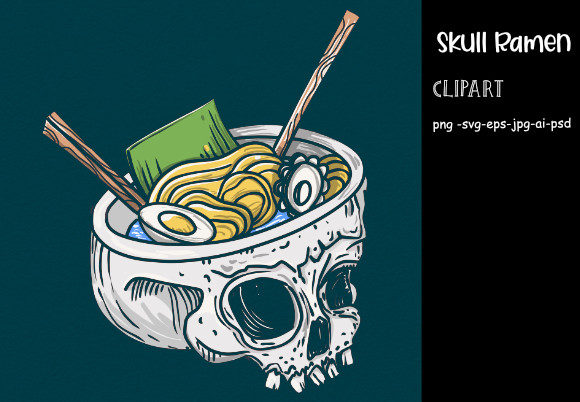
A Ramen Cup Skull Design Asset for Creative Graphics & Projects
When a client project lands on my desk with a request for a bold, playful, yet slightly edgy visual identity, the first thing I look for is an asset that carries a distinct mood without requiring endless customization. The Ramen Cup Skull graphic immediately presents itself as a unique hybrid, merging culinary comfort with rebellious skeleton aesthetics. It’s not just clipart; it’s a ready-made character with strong illustrative lines that can anchor a brand story. My first impression? It’s perfect for brands targeting a youthful, alternative audience—think a boutique ramen shop with streetwear aspirations, an indie craft soda company, or an Etsy seller focusing on quirky printable designs and sticker sets.
Mood and Style: Where the Ramen Cup Skull Graphic Naturally Fits
This graphic design asset creates a specific, engaging vibe. The detailed noodles and the skull’s structure suggest a meticulous, almost artisanal quality, while the overall composition leans into a modern, urban tattoo-influenced style. It feels handcrafted yet digitally polished. In practical terms, this means it naturally complements projects for small business branding that wants to feel authentic and culturally plugged-in. It avoids the generic feel of stock graphics and offers a narrative hook: the fusion of food and punk.
For a real client scenario, imagine conceptualizing a visual identity for a local ramen bar’s summer event or a new line of merchandise for a food blogger’s online store. The Ramen Cup Skull can serve as the central hero graphic for their t-shirt design, tote bags, and limited-edition mug series. Its style aligns seamlessly with marketing visuals for social media graphics, where standing out is critical. It wouldn’t fit a corporate, minimalist brand, but for a handmade business or a digital seller in the creative marketplace, it adds immediate personality.
Performance in Real Design Situations
Now, let’s get into the nitty-gritty of how this asset performs across different media. The file bundle, which includes high-resolution PNGs, JPEGs, and multiple vector formats (EPS, SVG, AI), is a professional’s starting point.
For logo design and brand identity, the vector files are essential. The clean lines allow for easy scaling and adaptation into a simplified logo mark or a supporting brand element. On packaging design, especially for product labels or stickers, the high-resolution 300 DPI files ensure crisp print quality. It can be a bold focal point on a poster or flyer for a local event, or a decorative accent on a website graphics banner.
In digital spaces, this asset shines. As a PNG with transparency, it layers beautifully over textured backgrounds for Instagram posts or Pinterest pins. It can be imported into Canva templates for quick social media content creation. For Cricut projects, the SVG files are gold, enabling seamless cutting for sticker design or apparel applications like sublimation design.
Where This Asset Works Best and Where Caution is Needed
The Ramen Cup Skull excels as a dominant visual in large layout areas. Think product mockups where it’s featured prominently on a t-shirt front, or as a hero graphic on a landing page for a seasonal campaign. Its intricate details are meant to be seen, making it ideal for printable wall art, merchandise, and editorial design with ample space.
However, its use requires careful judgment in certain contexts. The fine noodle details and skeletal features can become muddy at very small sizes, such as in a crowded footer of a website or as a tiny icon on a complex label. I would avoid placing it on low-contrast or busy backgrounds where its form might lose definition. It’s also not suited for projects demanding ultra-clean visual hierarchy or for professional corporate materials where the tone needs to be more reserved.
Impact on Brand Perception and Practical Design Checks
Using a graphic like this directly affects readability, hierarchy, and emotional appeal. When integrated into a layout, it commands attention. For brand consistency, it could define a secondary graphic language—used across campaign visuals alongside a cleaner primary logo. It builds visual trust with a niche audience by signaling authenticity and a specific creative direction.
Before committing this to a client project, I run a series of practical tests. First, I view it in black and white to ensure the forms hold up without color. I check contrast by placing it on both light and dark backgrounds. Previewing it at small and large sizes confirms its scalability limits. Crucially, I place it on real mockups—a t-shirt template, a mug, a web banner—to see how it interacts with real-world dimensions.
The commercial license is a must-confirm point. For print-on-demand sellers, Etsy products, or any commercial design use, verifying the license terms is non-negotiable. The provided file formats are a huge advantage: the PSD file allows for layered adjustments in Photoshop, the AI and EPS files for vector editing in Illustrator, and the SVG for web and cutter applications. This flexibility means I can tailor the asset to the project’s exact needs.
Final Thoughts for the Working Designer
The Ramen Cup Skull for P.O.D isn’t just another digital product in a design bundle. It’s a versatile illustration that, when applied thoughtfully, can elevate a project from generic to memorable. It supports a creative design direction for modern design in the food, craft, and alternative lifestyle spaces. For content creators, bloggers, and publishers looking for engaging blog visuals, it offers a ready-made, high-impact image.
My advice? Use it boldly where its mood aligns, but respect its complexities. Pair it with a strong, simple sans-serif font for balance, or a bold display font to amplify its energy. Avoid delicate script fonts that might clash with its gritty feel. This asset is a tool for building recognition and audience engagement for a client who isn’t afraid to show some creative teeth. In the right project, it becomes more than a graphic; it becomes a key piece of the brand’s visual story.