Evaluating Christmas Cup Ornament Design for Small Business Graphics
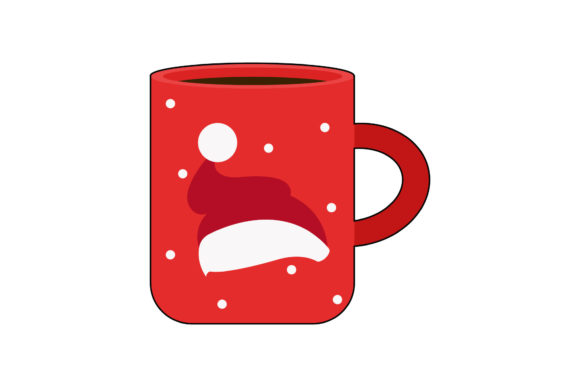
As a brand designer reviewing assets for a seasonal bakery client, the Christmas Cup Ornament Design presents itself first as a cheerful, decorative graphic. The initial impression is festive and friendly, suggesting a brand personality that is warm, welcoming, and playful. For a local business like a holiday café, a handmade soap company, or a boutique selling seasonal treats, this design asset leans toward a decorative, soft aesthetic rather than a starkly modern or minimalist one. It feels organic in its approach, perfect for businesses wanting to evoke a sense of tradition and handmade charm.
The Mood It Sets and the Brands It Fits
This graphic design asset immediately suggests a cozy, celebratory mood. It’s not overly bold or corporate; it’s an illustration that feels accessible. I see it fitting perfectly with food businesses—think cookie boxes from a local bakery—or with product sellers offering holiday candles, children’s items, or festive home decor. For a florist adding seasonal arrangements or a skincare brand launching a limited-edition holiday line, this icon provides a visual anchor that is inherently festive. Its style is more decorative and soft, making it ideal for businesses that want their packaging and promotional materials to feel personal and inviting, not cold or purely functional.
Real-World Application for Local Business Branding
In practical terms, for my bakery client’s project, the Christmas Cup Ornament Design becomes a versatile tool. Its availability in multiple formats—including vector files like AI and SVG—means it can be scaled and edited without loss of quality, a critical point for professional branding. Here’s how it translates into real design situations:
- It can serve as a central hero graphic on a holiday product label for mugs or specialty coffee blends.
- As a repeating pattern or accent on packaging design for gift boxes, adding visual interest without overwhelming the layout.
- Integrated into social media graphics for a seasonal campaign, creating a consistent visual theme across posts.
- Used on thank-you cards and stickers included with purchases, enhancing the customer experience.
- As a decorative element on menu graphics or price lists for a coffee shop’s holiday offerings.
- Featured in product mockups for website banners and promotional ads, instantly signaling the holiday theme.
- Applied to flyers, posters, and even business cards for a limited-time festive redesign.
How This Asset Strengthens Business Presentation
Using a cohesive graphic like this supports a small business in several tangible ways. First, it creates a stronger first impression. A cohesive, attractive label or package looks more intentional. It leads to better product recognition—customers will associate that festive cup with your brand’s holiday line. It establishes a clearer visual hierarchy on packaging, where the ornament can be the focal point above your brand name and product details. Most importantly, it builds a more consistent brand identity across all touchpoints, from the physical product to the digital marketing visuals. This consistency improves customer trust and presents a more polished, professional front, crucial for competing on a shelf or in a crowded online marketplace.
Optimal Uses for Maximum Impact
For my client’s project, I would prioritize using the Christmas Cup Ornament Design in these areas:
- Product Labels: As a primary or secondary graphic on jars, boxes, or bags.
- Packaging Accents: As a smaller repeated element on the sides or seals of packaging.
- Promotional Banners: For website or in-store displays announcing the holiday collection.
- Social Media Campaign Graphics: Creating a unified look for posts and ads.
- Seasonal Packaging: Transforming standard packaging into holiday-specific versions.
- Boutique Visuals: For window displays or in-store signage.
Considerations and Areas for Caution
While versatile, this design asset should be applied thoughtfully. It may not suit a formal corporate branding project seeking a luxury minimalist aesthetic. On very small labels, the detail might become lost or muddy. Avoid using it on crowded product packaging where it competes with essential text like ingredients or instructions. It’s not ideal for legal information areas where clarity is paramount. Also, be mindful of background contrast; placing it on a low-contrast background could render it ineffective. The key is to let it serve as a decorative enhancement, not a distraction from the core message.
Practical Designer Notes Before Implementation
Before applying this to any client work or physical product, a few practical checks are essential. Always test it on real packaging mockups—see how it looks at the actual print size. Check its usage in black and white to ensure it holds up if color isn’t available. Preview it on small labels to verify readability. Test it with your brand colors—does it harmonize or clash? Compare it with competitor packaging to ensure it stands out appropriately. For print, review the print quality from the high-resolution files. If using the SVG or AI files, inspect the vector editability to customize colors or simplify elements if needed. Test the PNG’s transparency on various backgrounds. Crucially, test the graphic beside different typography styles—a serif font for traditional elegance, a sans serif font for modern clean lines, a script font for handmade charm—to see which pairing strengthens your visual hierarchy. And above all, confirm the commercial licensing terms before using it for business branding, product sales, or client projects.
For a local business owner, marketer, or creative entrepreneur, a graphic like the Christmas Cup Ornament Design is more than just clipart; it’s a potential cornerstone for a seasonal brand identity. When integrated thoughtfully into packaging design, marketing visuals, and social media graphics, it can elevate the entire customer experience, making your holiday products feel special, cohesive, and professionally presented. The goal is to use such assets not just as decoration, but as strategic tools for building a stronger, more memorable local brand.